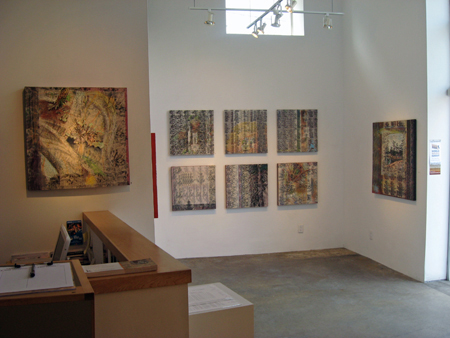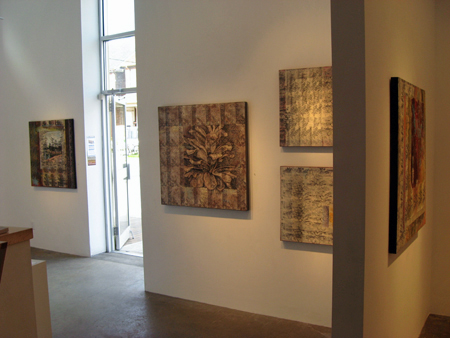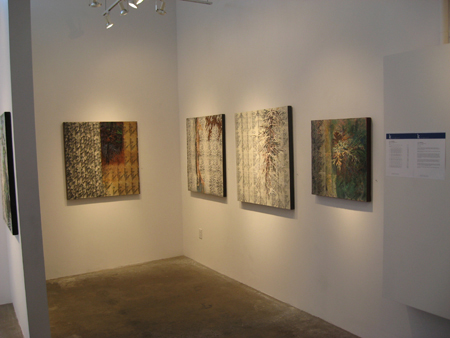
Susan Farquhar
Boreal Echo: recent collaged paintings
May 15 – June 15, 2008
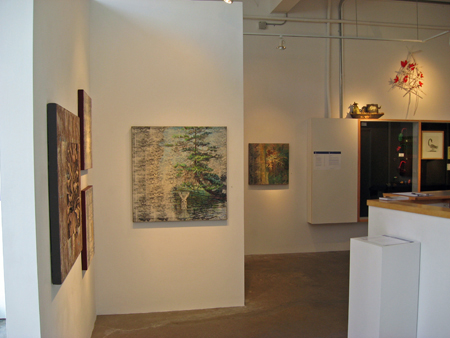
This exhibition is part of the World Washi Summit happening in Toronto, June 7 – 15, 2008. Washi is the Japanese word that refers to the traditional papers, made by hand from indigenous renewable plant fibres, which have been continuously produced and refined in Japan for 1400 years. (Information at www.worldwashisummit.com)
Artist Statement
I was born in Northern Ontario and I am aware that this landscape has deeply impressed me. I think that I am seeking anew how to express this influence: what the memory of it means to me now, and what I am doing with it.
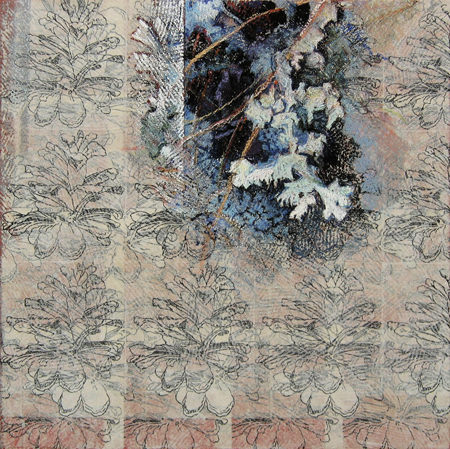
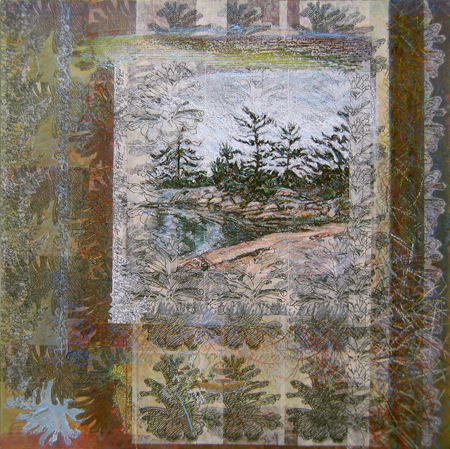
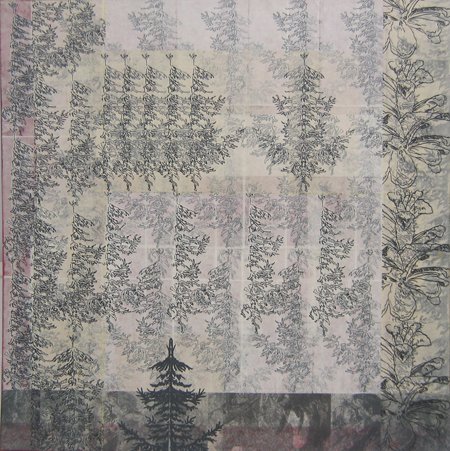
Drawing is the first step; it connects landscape and pattern. I have done a lot of drawing of conifer trees in one-way or another.
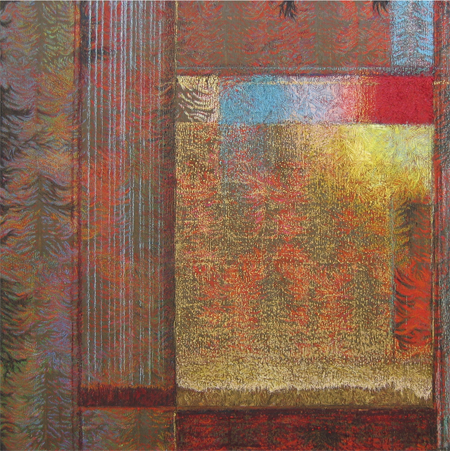
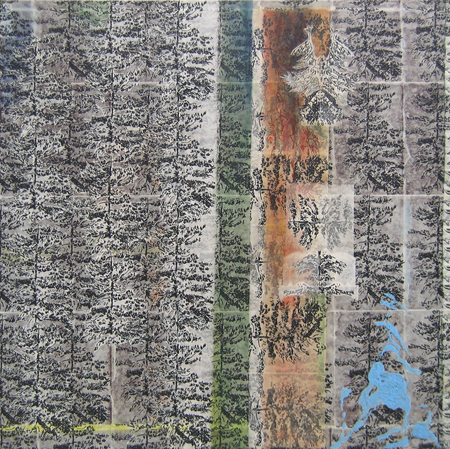
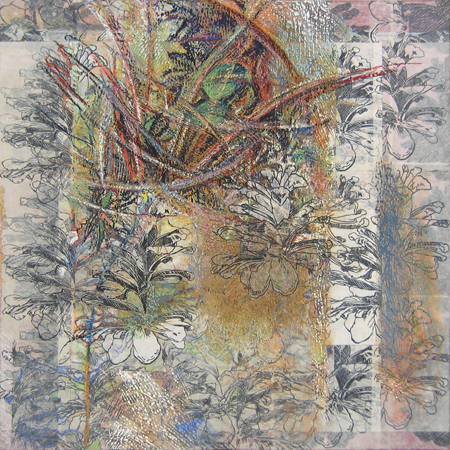
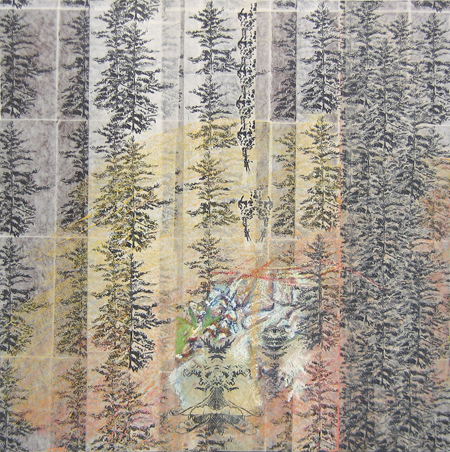
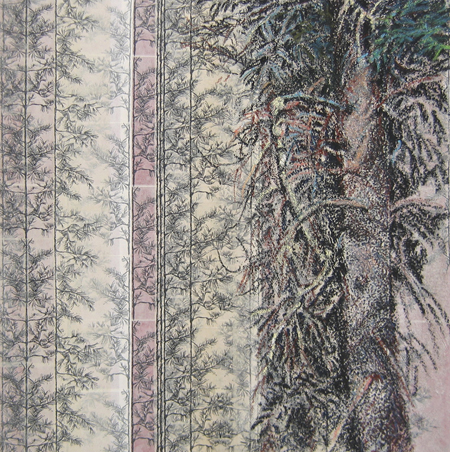
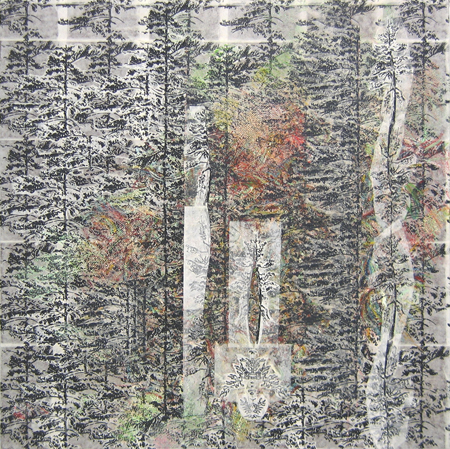
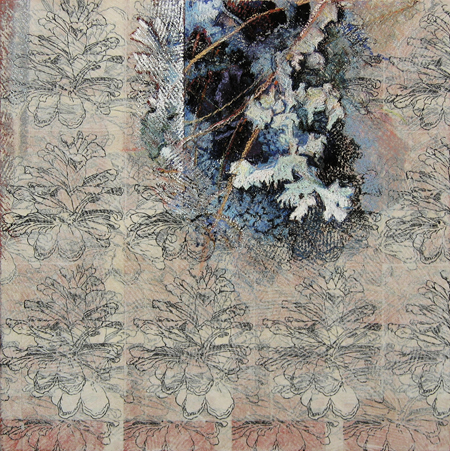
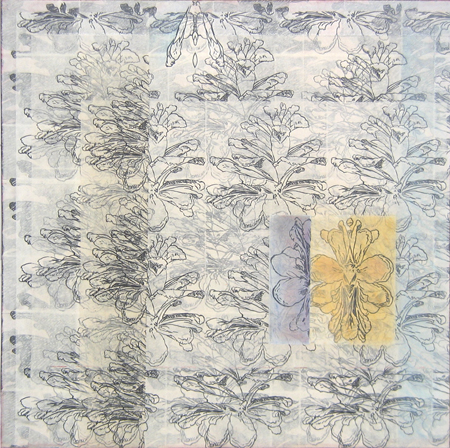
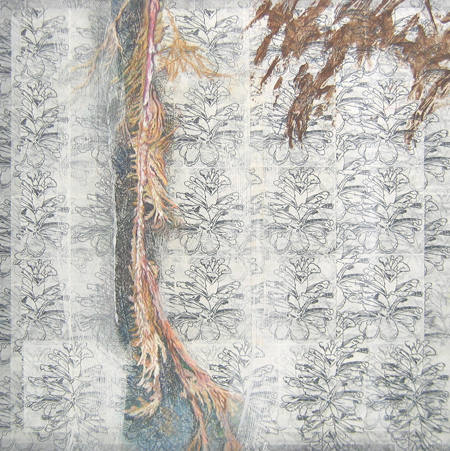
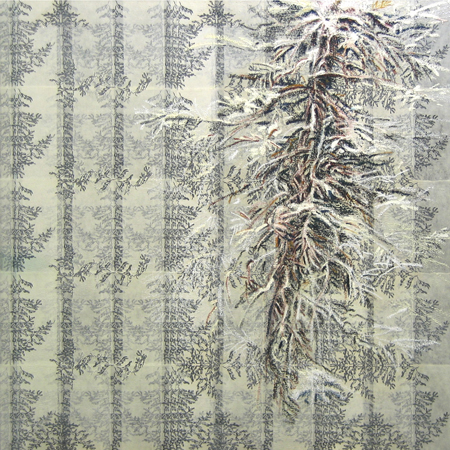
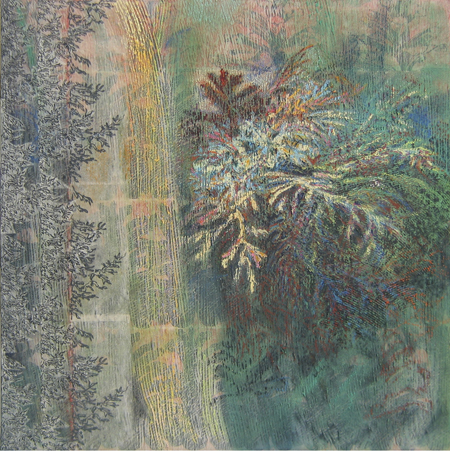
A while ago I decided to hand screen-print my line drawings of conifer trees onto washi. Washi is traditional Japanese paper handmade from the long fibres of three plants: Koso, Mitsumata and Gampi. Printing allows the drawings to become repeatable which is my way forward. Printing by hand keeps things less mechanical looking and different from digital or giclée printing. Multiples of each drawing allows me to experiment, try variations of the drawing and see the beginning or clues to what is possible.
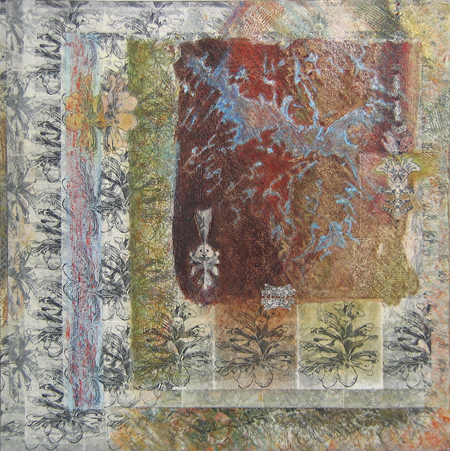
The washi is the key to the image-making method. The natural fibres of this handmade paper, its strength and range of transparency are as important as printing the drawings. I begin with the canvas painted in a colour and commence gluing the printed washi on top in as many layers as it takes to come to a resolution.
The next stage is drawing again on the washi. This requires a painted layer of medium mixed with an abrasive to help hold the oil pastel drawing to the washi surface. This abrasive layer while once just functional has now become a drawing itself in some cases.
All of the above is often repeated to gain the image; that is to find the bits and pieces of what is Northern to me.